TikTok is one of the leading social platforms for user engagement, and they’re finding a way to take that even further by allowing it to work as if it were a search engine. A new search ads toggle became available at the beginning of September, providing ease of use as well as discoverability for advertisers.
How does the search toggle work? It begins when a user clicks the search button at the top of the “For You” feed. From there, they type in the search query (what they are hoping to find), which then brings a series of search results. An advertiser’s ad will appear among those search results.
The new search toggle uses the in-feed creative that advertisers are already running on the platform, serving users those ads when they search for something said ad may be relevant to. The simplicity of the offering – toggling the search capability on or off – make it an easy addition to the platform.
TikTok’s internal data shows that 70% of ad groups with the search ads toggle “on” experience a less expensive cost per action (CPA), due to more efficient conversions from the search ad placement. It’s a significant development for the platform and its advertising ecosystem, providing a new way to reach potential consumers.
Whether through paid or organic placement, TikTok is a great way to get your message seen by an engaged audience. We’d be happy to help you identify the best way to leverage TikTok or any other social media platform!
As of 2023, an estimated 4.9 billion people use social media across the world – and that number is expected to jump by approximately 20% by 2027! In the last three years, the online advertising world – especially social – has continued to change and diversify, providing more avenues for businesses to reach their target audience.
Back in 2018, an estimated 68% of U.S. adults used Facebook and 35% used Instagram. Both platforms, while still highly relevant, have seen a slight decline or slowing of social media users. Audiences have multiple different social media options. In fact, the typical social media user interacts with an average of 6.6 social media platforms and spends an average of 2 hours and 35 minutes on social media each day.
Generational Platform Trends
It’s no surprise that the largest audience for social growth is expected to come from Gen Z – those born between 1997-2012. Millennials (those born between 1981-1996) are expected to remain fairly consistent over the next few years, with a slight increase. By 2027, Gen Z and millennial social network users are expected to account for over half of the total social users in the United States.
TikTok, Snapchat and Instagram are the most popular social media platforms among this age group, although Snapchat tends to draw a higher share of Gen Z teens than Gen Z adults. Millennials dominate on Reddit (representing 40% of the user base) and are also present on TikTok (although not as much as Gen Z). Facebook and X (formerly Twitter) are both projected to lose millennial users this year.
Planning for Your Audience
As we start to look ahead to planning for 2024 and beyond, it’s best to look at things holistically. Depending on your target audience, it may be advantageous to split your social media budget among multiple platforms. Platforms like Reddit, Pinterest and LinkedIn have become bigger pieces of the advertising spend pie.
It’s also important to remember that traditional media still holds its place in this landscape as well. Millennials spend over 17% of their media time on traditional TV and listen to radio more than any other generation (including both broadcast and streaming radio). Gen Z spends over 10% of their time on traditional TV and 55% of them listen to the radio every day.
The beginning of July brought fireworks, hot dogs, the 4th of July……AND a new social media platform!
During the first week of July, Meta introduced Threads, a new platform for real-time conversations and sharing. Within the first 48 hours, it had surpassed 70 million signups. With similarities to Twitter – users in both apps can engage with the posts they see by liking, replying, and sharing – Meta has provided a familiar and easy-to-use alternative.
Threads currently does not offer advertising or monetization on the platform, but chances are that will change in the future. Since it does exist within the Meta ecosystem, if advertising does become available, it will likely be a relatively easy addition to existing social media strategies.
For small and medium sized businesses and social media teams, adopting something new doesn’t – and shouldn’t – happen overnight. If you’re curious about Threads, now is a perfect time to experiment and test out organic content. Everyone – including Meta – is figuring out Threads in real time.
While Threads isn’t offering advertising opportunities currently, there are a number of other proven social media platforms other than Facebook that may make sense for your business.
LinkedIn provides a way to engage on social media within the professional realm. The major advantage of LinkedIn marketing is that you can reach trustworthy professionals to drive actions relevant to your business and goals. Another advantage is the first-party data available just through someone’s profile. You can distinguish one’s job, position, what company and how long they’ve been employed, education, previous employers, skills, and who they are connected to. LinkedIn provides a vast number of targeting tactics such as company size, groups of interest, education, location and geography, and more that can further ensure that your dollars are being spent correctly.
People come to Twitter with a discovery mindset, so you can offer a lasting impression on those who are served your ads. The audience on Twitter is more likely to be passionate, engaged, and open to learning than those on other social media sites. People spend 25% more time viewing ads on Twitter than other leading platforms. Twitter has a vast and detailed process of providing you with the correct audience for your campaign. You can pinpoint based on demographics (location, language, platform, device, age, and gender). Then you can further split those groups into targeting based on event, tweet engage, keyword, movies, tv, interest, conversation, and more.
Pinterest is used by those who want something new, but don’t have an exact idea in mind. Advertising on this platform offers brand awareness, conversions, offline sales, and more traffic. It can be used as a visual search engine – which makes this platform a standout for retail, ensuring ads are relevant to what the pinners are searching for. Pinterest offers ways to find the perfect target audience for your business or campaign. They allow targets to be split based on demographics (age, gender, location, or language), interests, keywords, customer lists (reaching those who engage with your website, store or previous ads), and ‘actalike’s.’
While Reddit hasn’t always been recognized as part of the social media landscape, it’s gaining some traction in recent years. Second only to TikTok in terms of growth in 2021, Reddit is a diverse channel filled with interests that run the gamut of nearly every hobby, topic, or interest you could imagine. With over 3 million subreddits (collections of communities), Reddit can likely help you zero in on your target audience. While Reddit has fewer users than Facebook or Instagram, it makes up for it in user engagement. You can target by interest, communities, or custom audiences. An ideal audience size is approximately 1M users, so given the niche nature of the platform, it is not recommended to run campaigns at anything less than a state-wide geography.
Online reviews have become an essential tool for consumers who are deciding which businesses to support. With so many online platforms, the average person can share their experience in just a few clicks. There’s a lot you can learn from online reviews, and they can be a valuable tool for improving your customer service. Every review – both good and bad – can help affect your business, so it’s important to try to steer the narrative.
There’s no need to be intimidated: review response can be expertly handled if you understand a few key points. The first thing to note is that today’s consumers are savvy. They don’t want templated responses but instead prefer to feel like they are communicating with an actual person who really hears what they’re saying, and cares about it.
6 Things to Keep in Mind when Responding to Reviews
How can you accomplish a personal discourse? Here are six things to keep in mind when it comes to responding to reviews.
1. Know your customers.
It’s important to have a basic understanding of the types of people leaving reviews and the comments your company receives. One way to do this is to keep a log of your past reviews for reference. Notice repeat reviewers, and look for patterns in your reviews. Is there a particular complaint or department that’s popping up repeatedly from different customers? Make sure that one gets your full attention.
2. Categorize & Prioritize
Look at it as a kind of triage: categorize your reviews by sentiment, urgency, and so on. Remember that your reviewers are your customers, and what they’re saying is important to them or they wouldn’t have taken the time to write a review. Handle the most urgent issues first, but respond to all of your reviews within a pre-determined timeframe.
3. have a plan in place
Use the categorization to create an action plan that uses reviews to improve your business. Who should you notify? If the review is positive, does someone need to be commended? If it’s negative, you’ll likely need to let more people know, especially if it contains sensitive information or refers to specific employees. Sometimes the review will originate from an ex-employee, and you should have a plan for that possibility as well.
4. know the frame of reference
Make sure you have a list of ongoing replies and an FAQ document of some sort from your company before writing a reply. Before writing a reply, check out the reviewer, learning as much as you can about the person in order to understand his or her point of view. See if you can view their social profiles. Have we talked before? Have they used our product or services? Knowing a little bit more about the customer can help you evaluate whether your reply needs to be public or private.
5. offer a personal response
Here’s the crux of the matter: people want a personal connection with a human being. That’s why auto-response and templated responses do not work when it comes to reviews. Write a response that feels genuine, thanking them for taking the time to write the review and addressing any concerns they have in a supportive manner.
6. make sure your response is appropriate
Think about this: the response you give is not simply going to the reviewer but to the entire online community. People who are interested in your business, people who are already your customers, and even your competition could potentially read your response. That’s one reason to always remain cordial, even in the face of criticism. Another thing to consider? When the review is positive, craft your response to include your business name, location, and any applicable promotions. When it’s negative, avoid including that information, or any other words that could land a bad review in a search result for your business. Sometimes, a customer needs a heartfelt apology. Other times, a friendly emoji will suffice.
Chances are, you’ve heard or read something about AI (Artificial Intelligence) in the last few months. The rapid development of AI is an unprecedented phenomenon, and this technology is becoming more complex and powerful.
AI in Design
Adobe is leaning into AI Design tools, currently in beta mode. This model – Firefly – has a goal of empowering users of all experience levels to generate quality images and text effects. For creators who do not want their content used in model training, a “Do Not Train” tag will be introduced and associated with that content.
AI in Content
In a recent Adobe study, 88% of brands said content demand has at least doubled over the last year; two-thirds of those surveyed expect it to grow 5x over the next two years. This provides AI an opportunity to help create content for blog posts, social media updates, and more.
ChatGPT is an artificial intelligence chatbot, released about six months ago by OpenAI, with a free basic version. Generative tools like this have wriggled into schools, leading administrators to wonder what to do next. Some schools have banned the technology entirely, while others are embracing it as a tool to teach students how to tell the difference between reality and science fiction.
This tool can create text, art, videos and music via natural language processing (NLP). Within the first two months of its release, the platform reached 100 million active users.
However, AI models need training data. When you enter data in, it becomes part of the data collective of that application. The data entered is likely not private to you anymore, so you must consider how you apply this new technology.
AI in Marketing
Why does AI matter for marketing? People have adopted digital in a huge way for nearly aspect of their lives, and many of these new habits and behaviors are sticking. This makes it more difficult to predict a consumer’s next step. Today’s AI breakthroughs become a multiplying force for businesses by empowering them to stay on top of consumer needs and trends.
AI is already in use in much of digital and social advertising, with optimized bids, responsive ads, etc. However, it’s important to still utilize a human touch. To deliver optimal results, it’s critical that human expertise guides the AI and works hand-in-hand with the technology.
The core tenets of Central States Marketing include respect, innovation, teamwork, disruption, and support. When looking at the upcoming year, a few of our team members developed an internal program for employees – Give, Gather, Grow.
The program’s goal is to engage employees with intentional purpose in their routines. With the hectic pace of today’s world, we often are moving quickly and don’t take time to reset and regroup. Your health – mental and physical – affects all you do in life, which will trickle down to your work life.
give
how can we give back to the community? This year, we’ve coordinated donations for various local non-profit organizations.
gather
provides a chance for us to gather together as a group, learn more and get to know each other on a deeper level.
grow
focuses on how we can grow and better ourselves physically and mentally. It provides a way for us to invest in ourselves.
In addition to these core pieces, the program also includes optional incentive-based programs. It’s not a mandatory portion of Give, Gather, Grow, but provides a monetary incentive for us to hold ourselves accountable.
Each quarter, one option is to read a particular book (or listen on Audible), which helps us connect and open dialogue around those books, what we’ve learned, etc. It also shows how we all take away different things from what we hear and read. Additional bonus opportunities include continuing education programs, CPR training, and other activities that contribute to our mental wellness.
Books we’ve read so far this year include:
“Master Your Thinking” (by Thibaut Meurisse)
“Stop Overthinking: 23 Techniques to Relieve Stress, Stop Negative Spirals, Declutter Your Mind, and Focus on the Present” (by Nick Trenton)
This has been a great way for our team to invest in ourselves and bond over our activities. Growing together not only makes us all stronger individually, but also as a team. What are some ways you can encourage your team to invest in themselves? You can keep it simple, with something as easy as collecting donations for a shared cause or a team event!
If your company posts social media content every day, that’s 365 pieces of content each year. Multiply that by however many years you’ve been posting, and that’s a lot of content in the archive!
Pieces that performed well should absolutely be reused again!
And there are a whole lot of reasons why.
Who says you need new content? Where’s the rule that every post has to be brand new? Good content is good content, no matter how many times you’ve seen it. I’m pretty sure bands play your favorite songs night after night, and we both know how many times you’ve re-binged The Office or Friends.
Your audience likely hasn’t even seen your content
Small brands tend to hit a 32% reach rate (number of people who’ve seen your post/followers), while brands in the 500k range generally strike a 12% reach rate.
That means somewhere between 68% and 88% of your followers haven’t seen any one post in particular. That post you thought should’ve popped off? Throw it back up.
Think of those content pieces as your “greatest hits”
Proven pieces of content that support the legacy of the brand help touch on a point of familiarity. Take a look through your top 50 posts to see what’s worked, then re-use those top performers every year. Think of it this way – if you go to see Bruce Springsteen, you’re probably going to see “Born to Run.”
Put a “twist” on it
We’re in the heavy hooks era of social. The first few seconds of your video arguably matter more than the content of the video itself. If that TikTok you believed in didn’t perform? That doesn’t mean it’s not the right idea—it means you should consider adjusting your intro. Maybe you needed bigger on-screen text, a human face looking back through the phone, or just a different headline. It’s worth testing again with a different hook.
It’s no understatement to say that the world has changed considerably in the last three years. The same can be said for marketing and consumer trends.
A recent survey of digital marketing campaigns nationwide found that year over year, Click Through Rate and Cost Per Click have both remained relatively stable, but Conversion Rate has decreased significantly, leading to a similar increase in Cost Per Lead.
What’s driving this change?
The largest and smallest increases indicate that inflation is a big driver – 91% of industries saw an increase in Cost Per Lead. Inflation and an uncertain economy are causing consumers to be more conscious of spending – people don’t want to stop spending; they want to save.
Did you know that a consumer needs to encounter a brand an average of 7x before becoming a customer? With so many touchpoints needed, it’s clear that paid search marketing alone isn’t going to cut it. 87% of consumers want brands to provide more consistent experiences across tactics. Brands that use three or more tactics also see a higher conversion rate of 287% on average.
Social media, digital display ads, and pre-roll/streaming video are among the most popular tactics to supplement paid search. A recent survey of small-to-medium-sized businesses (SMBs) showed that the majority expect to increase spending for the following mediums over the next 12 months:
53% expected to increase spending in social media
60% expected to increase spending in digital display ads
61% expected to increase spending in pre roll/streaming video
Data shows that about 25% of people make New Year’s Resolutions, and the majority think they’ll accomplish them.
Even if you don’t keep them, setting resolutions can help you improve in different aspects of your life, as well as increasing hope and optimism. When you seek to do better or be better, you tend to inspire others as well.
Notre Dame football coach Lou Holtz may be most famous for coaching his team to nine straight New Year’s Day bowl games. Or maybe you remember him for that undefeated national championship season in 1988.
While several of us at Central States Marketing are big Notre Dame fans, it’s something that Lou did OFF the field that is inspiring us this year. Lou encouraged his players to adopt a W.I.N mentality in their daily lives and we’ve chosen that philosophy as our touch stone for 2023.
What’s Important Now?
W.I.N. is a simple acronym that the famous coach used to remind his players to consider “What’s Important Now.” We can’t think of a better time than the start of a new year to ask ourselves that question—whether in regards to our personal lives or our business strategy. It’s so easy to operate on auto-pilot and move through life without paying attention to the scenery. We train ourselves to get through the day-to-day chaos of this world by developing routines and responses that require little thought. We set the alarm for the same time each day, we order the same coffee, we gather information from the same sources and we do the same promotions year after year because it’s fast and it’s worked in the past.
But it can be life-changing to pause and really take note of what’s happening around us. Lou encouraged his players to ask themselves “What’s Important Now?” at least 35 times a day! For those of us who get through life by multi-tasking and juggling two or three priorities at a time—it can be tough to stop and truly consider what one thing deserves top priority and our full attention at any given moment. But when we are able to slow down and truly focus on what’s important now, we often find that our thoughts are clearer and our responses are more informed and creative.
At CSM we are committed to having a W.I.N mentality in 2023. Won’t you join us? The impact on our health, our relationships and our careers may not get us into a New Year’s Day bowl game, but we believe it will allow us to look back on 2023 as a season of victory!
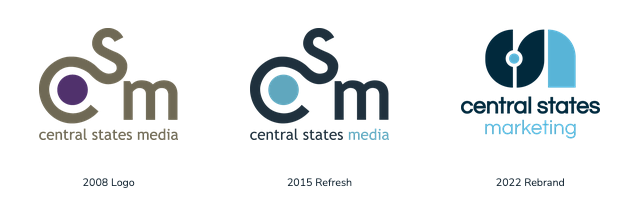
In the life of every legacy brand, including our own, there comes a day when a tired graphic identity needs a reboot. After 22 years, Central States Media is rebranding as Central States Marketing and we’re excited to finally unveil our new look to the people that matter most—our clients!
We are forever grateful to the clients who believed in us back then and to those who continue to trust us today. Thank you!
Renewed commitment, time-tested values
As we relaunch the CSM brand, we do so with the promise to continue providing the visionary strategy and personal service that you have come to expect from us. We may be growing, but we will never lose sight of our values. We built this agency on trust and transparency, and we remain committed to building long-term, mutually beneficial partnerships with our customers.
Did you know…
– While our midwestern roots run deep, we also serve national and international clients. – While we DO create and place thousands of media campaigns every year, we also provide strategic direction, market research, and award-winning design services. – While we have been in business for 22 years, we recreate ourselves daily as we stay ahead of new tools and trends to help grow your business. – CSM was born in an alcove above Ann’s garage and now we have offices in 3 states from which we run campaigns in five languages in ten different countries.