The digital landscape is evolving, and AI-powered LLMs, like Gemini and ChatGPT are changing how people find information. Being visible online goes far beyond just showing up in Google search. Search engine optimization (SEO) and search engine marketing (SEM) are two common digital marketing strategies, and while both help your business show on search engines, there are a number of differences between the two.The digital landscape is evolving, and AI-powered LLMs, like Gemini and ChatGPT are changing how people find information. Being visible online goes far beyond just showing up in Google search. Search engine optimization (SEO) and search engine marketing (SEM) are two common digital marketing strategies, and while both help your business show on search engines, there are a number of differences between the two.

What is SEO+?

SEO+ is the next level in Search Engine Optimization, using AI Optimized strategies that help improve your online presence through strategic content creation, keyword optimization, directory listings, and more to help your website show in organic search results. These updates make your website more appealing to both search engines and searchers, helping to build your web presence and drive local traffic, while creating long-term authority in organic search results. This, in turn, continues to positively impact your business over time.

What is SEM/PCC?

Search marketing can go by a lot of different names, like paid search advertising, pay-per-click (PPC), and search engine marketing (SEM). But all of these names are describing a way for your business to show as a paid result on search engine results pages (SERPs) by creating ads on platforms like Google and Bing and bidding on specific keywords. SEM drives calls and leads from locally-targeted prospects and generates an immediate response from paid search results. Unlike SEO, you can start seeing immediate results from SEM, but there are no additional impacts to your business after you stop paying for ads.

business meeting about seo

SEM+SEO = Marketing Magic

Combining the long-term power of SEO+ with the instant visibility of SEM creates a marketing strategy that drives both sustained growth and immediate results. While SEO+ works behind the scenes to build your website’s authority, improve rankings, and enhance user experience through AI-driven content and technical optimization, SEM ensures your business shows up at the top of search results right when your audience is actively searching. This dual presence—organic and paid—not only increases your visibility but also boosts credibility and click-through rates. In fact, businesses that integrate SEO+ and SEM strategies see an average of 25% more clicks and stronger lead generation, making it a powerful, performance-driven approach to digital marketing.


Reach multi-generational streamers on two powerhouse platforms—Disney+ and Hulu.

With over 178 million combined subscribers and major audience lift when both platforms are used together, your ads can go further than ever. Whether it’s sports fans on ESPN+, Marvel lovers on Disney+, or drama junkies on Hulu, this update lets you stream your message to the right audience—right where they are.

Disney Streaming Entertainment recently announced an update allowing users to run ads across both Disney+ and Hulu inventory, allowing you to connect with multi-generational streamers all in one place.

Whether they’re immersed in the worlds of Disney, Marvel and Star Wars, or binge-watching Hulu favorites like “The Bear” or “Only Murders in the Building”, the advertiser’s message is delivered seamlessly.

stats

88% of U.S. households have at least one video streaming subscription

53% of households have at least four subscriptions!

As of 2025, 88% of U.S. households have at least one video streaming subscription, and 53% of households have at least four subscriptions! With 124.6 million subscribers worldwide, Disney+ holds a 13% market share, while Hulu has 53.6 million paid subscribers and an 11% market share. The majority (24.7%) of Disney+ users are 25-34 years old, and nearly 20% are aged 35-44. Hulu primarily targets to those aged 18-49, and 54% of users are under 42 years old.

With the addition of ESPN+ on Disney+, advertisers can also connect with fans as they watch their favorite teams or catch up on the latest sports highlights. While advertisers are unable to target solely on ESPN+ at this time, they can target audiences of specific sports (i.e. Fans of NFL or MLB) to get closer to a sports-targeted audience.

The CPMs (Cost Per Thousand Impressions) for both platforms are around $30 – 50, so adding both Disney+ and Hulu is not expected to increase the cost.

Disney+ delivers a 48% incremental audience lift to Hulu ads, while Hulu provides a 45% incremental audience lift to Disney+ ads! What’s more, nearly two-thirds of Disney+ and Hulu viewers are cord-cutters or cord-nevers who can’t be reached on linear TV.

The social media landscape is constantly evolving

2025 is projected to see a rise in AI-powered content, short-form videos, social commerce, micro-influencer marketing, and more. New social media channels and platforms may emerge as well. But two existing platforms are also testing some changes and possibly changing owners. Let’s take a look at what’s new in the world of social media apps.

Meta

ou may have recently noticed a new roll out on Meta (Facebook/Instagram/Threads). The Community Notes feature allows people to add more context to posts that are potentially misleading or confusing. Meta will be using Community Notes to draw on a broader range of voices to decide which content would benefit from additional information.

Beginning March 18th, Community Notes are now available for testing to eligible contributors. Meta is admitting eligible contributors from the waitlist in randomized batches to test the writing and rating system.

Contributors may select a public post by clicking on the “three dot” menu and choosing “write community note.” Most public content is eligible; to start, however, some types of content may not be supported, such as ads, Stories and Reels. Also, Community Notes cannot be added to content with limited audiences such as private posts, messages, Events, Dating, and Marketplace content.

More information can be found here: Community Notes: A New Way to Add Context to Posts | Transparency Center

TikTok

TikTok parent company ByteDance Ltd is once again racing toward a deadline to sell off its app or face a ban in the United States. To recap – on January 19th the Senate-approved “Protecting Americans from Foreign Adversary Controlled Applications Act” went into law. Among other elements, TikTok was required to be sold to a U.S.-owned entity. After his inauguration on January 20th, President Trump granted TikTok and ByteDance an additional 75 days to arrange a deal. That current deadline is April 4th.

According to Vice President J.D. Vance, a deal is likely getting close. Several interested buyers have publicly emerged, and the most recent reports indicate that Oracle is the leading contender to acquire the U.S. operations of TikTok. While questions remain about what ByteDance’s role will be in any potential deal, the current situation looks promising for TikTok to continue in the U.S.

More details on the potential deal can be found here: US Government Says TikTok Deal Is Getting Close | Social Media Today

master video ads in 2025

At Central States Marketing, we work to keep a clear outlook on how consumers are viewing video content as the year 2025 continues to take off. The number of choices for streaming and video placement can continue to be overwhelming when deciding where the best audiences are for your digital marketing efforts.

Sprout Social, a social media management platform, recently shared insights on streaming and video placement.

When considering the different types of videos, it’s essential to understand whether your marketing plan requires short—or long-form video content.

Short-form videos typically last less than 60 seconds and are better for engagement. However, if your company is focused on more detailed and informative content, you may want to consider long-form videos.

On average, people watch at least 16 seconds of a video in under 1 minute, that is 27% of the overall video. Compare that to a 60-minute video, which would get an average watch time of 16 minutes. The choice between the two is dependent on your planning strategies.

Short-form video will continue to be a strong tactic in 2025, with 30% of brands using it for their marketing. 44% of people say they prefer watching a short product or explainer video rather than a longer one.

youtube – streaming video & ‘shorts’

YouTube could be considered the first hub for viral video content. The platform helps harness the power of video and is the world’s second-largest search engine.

For many businesses, YouTube is an ideal platform for digital advertising because many people search for entertaining content daily. 40.9% of YouTube watch time is done on mobile devices.

Ideally, YouTube ads are between 15-30 seconds.

In 2020, YouTube introduced ‘Shorts’. It is a short-form section of the platform. YouTube Shorts focus on vertical videos that are less than 180 seconds and offer features for user interaction.

meta – stories & reels

By the end of 2024, 50% of the time spent on Facebook is used to view video content. Vertical videos that feature audio have a 35% higher click-through rate (CTR).

Meta video ads can range from 1-120 seconds. The most successful video ads range between 5-30 seconds on the platform.

Instagram and Facebook are both platforms under the Meta umbrella. When an ad is placed on Meta Ads Manager, it will optimize between these platforms unless manually set to do otherwise. Out of both platforms, Instagram is well-known for their Reels and Stories.

Reels is a section of the Instagram platform where viewers can swipe up and down to view short-form vertical view content. This is one of the most popular user functions for the app. Like TikTok, media consumers will scroll through organic content and be exposed to advertising consistently. Reels have a 22% higher chance of engaging users on Instagram compared to a standard video post.

Instagram Stories can be both images and videos. They are profile bubbles at the top of the home screen where users will click to view daily content from friends and people that they choose to follow. When tapping through Instagram Stories, an ad will be shown every 2-3 organic views.

tiktok – ‘for you page’ (fyp)

TikTok is purely made for video content. It’s one of the most popular social media platforms in the world. Despite the 14-hour ban in the United States in mid-January, the platform returned to active with an extension on the ban to give the parent company the opportunity to share the venture with a new, American business.

The engagement on TikTok is excellent for local businesses, ecommerce, and higher education to name a few. The largest audience group is Gen Z – being those between the ages of 18 to 24.

On average, 63% of TikTok videos that highlight a company’s key message in the first 3 seconds get a higher click-through rate. Users can discover new content by scrolling through what is known as a ‘For You Page’ or FYP. This is what makes TikTok customizable. They offer new content to users, if they view or interact with the video, that platform continues to learn about their unique interests.

On average, ads are shown on the FYP between 2-4 organic content swipes. TikTok video ads can be 5-60 seconds in length. Although, TikTok recommends 9-15 seconds to grab the attention of the viewer quickly.

snapchat – stories & spotlight

Snapchat is a place where both static image and video ads can have a place to thrive. The average Snapchat user spends over 30 minutes on Snapchat every day and opens the app more than 30 times.

On this platform, ads can be shown to users who are scrolling through stories, which are posts made by their friend connections. Another section of Snapchat is known as ‘Spotlight’ where short-form vertical content is quick to view and easy to thumb through.

64% of all ads on Snapchat are viewed with sound on. The addition of sound on both static images and videos is valuable to how the viewer received the ad. The platform recommends having the company name or key message shared within the first 2 seconds of a video to increase the chances of conversion.

Snapchat video ads can be 3-180 seconds long. It’s recommended to keep Snapchat Story ads between 5-15 seconds.

We’ve been throwing around these letters for generations (the term “AI” was first used by computer scientist John McCarthy at the Dartmouth Summer Research Project on Artificial Intelligence in 1956), but it’s only in the last decade that the power of AI has become accessible to the masses.

When you’re checking out after making an online purchase and you see the phrase “people also bought” — that’s AI. When you unlock your phone simply by looking at it–that’s AI. When you ask Siri to identify the song that’s playing in the coffee shop or ask Google Maps for directions–that’s AI. But let’s be honest, using AI is one thing, but channeling it for your business is quite another.

That’s where we come in. AI is revolutionizing digital advertising and at Central States Marketing, we’re making sure you’re not left behind. We’ve been using AI to optimize your digital advertising for years. When we set up ad groups, monitor their performance, pause those that aren’t delivering and amplify those that are, we’re using the data analytical power of AI. But as AI tools improve, we’ll be able to improve our ability to segment audiences even more accurately and target them more personally.

AI: The future is here

here’s some advancements we’re looking forward to in 2025:

voice and visual search

AI is improving our ability to interact with consumers in a more intuitive way, making it easier for them to ask question, search options and build a relationship with your brand, thus ensuring you’re top-of-mind when they are ready to act.

hyper personalization

AI is bringing us the ability to better tailor creative to individual preferences and to engage across multiple touchpoints, making the user experience more personal and building even greater brand loyalty.

programmatic advertising

AI is allowing us to segment audiences more precisely and is providing real-time analysis of audience interaction with messaging, further improving campaign performance and ROI.

Technology Enhances. People Inspire.

While AI is undeniably revolutionizing the capabilities of agencies and businesses alike, it’s essential to remember that nothing replaces the power of people. AI, much like a calculator, provides us with faster insights, greater efficiency, and the ability to do more than ever before. But just as a calculator doesn’t solve a problem on its own, AI doesn’t automatically deliver results. It’s up to us—creative strategists, marketers, and decision-makers—to interpret the information, craft compelling narratives, and apply strategic insights. At the heart of every innovative campaign is human ingenuity, ensuring that technology amplifies our potential rather than replacing it.


Helping build brand awareness, running ads to grow your audience, and engaging with your customers. But protecting your accounts is crucial to maintain control over your content, protect your brand, minimize the risk of accidental damage or unauthorized posts, and prevent security issues. Limiting the number of administrators or owners of your social media business pages is a simple way to safeguard your pages.

meta

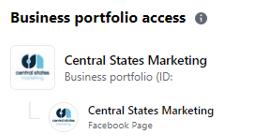
Business Facebook pages should be owned by your Business Portfolio, which connects your Facebook page(s), Instagram account(s), and other assets. However, it is possible to have your page owned by Individuals instead, although this is not best practice. If you’re unsure who owns the page, you can log in to Facebook and go to the business page. Select Settings (left-hand sidebar) and then select Page Setup, then Page Access.

At the top it lists people with Facebook access (individuals). If it is owned by a Business Portfolio Account, it will include an ID (example below).


  • For pages owned by a Business Portfolio, full access details can be found here: https://www.facebook.com/business/help/1101781386943864?helpref=faq_content

  • For pages that are not part of a Business Portfolio, those steps can be found here: https://www.facebook.com/help/289207354498410/?helpref=uf_share 

  • You can also find resources for Privacy Checkups to guide you through privacy and security settings here: Facebook Privacy Checkup | Facebook Help Center 

linkedin

You can assign different roles to team members, such as Super Admin (has complete control over the page including adding/removing other admins, deactivating the page, or editing page information), Content Admin (creates and manages page content, jobs, etc)

It’s recommended to have a minimum of two admins on your page in case one loses access or leaves the organization. Anyone who leaves the company should have their admin access removed as well.

  • To become an admin of a page, you’ll need to request admin access or be granted access by an existing admin. Full guidelines can be found here: https://www.linkedin.com/help/linkedin/answer/a541981. 

tiktok

TikTok Business Center is a central space to manage your business on the platform. When you add members to your business center, you’ll be able to give them permission to safely manage your assets and ad accounts.

Start by logging into your TikTok for Business account. Under the Members tab, click Invite Member and enter the new member’s email address. In the Access Settings section, choose what type of access your new member should have.

An invitation will be sent to the email you provided. If they don’t receive the invitation, click their email address in the Members tab and click Resend.

snapchat

You may have different levels of functionality and access to a business account. Depending on your role, you can invite a member to your organization. New members must be added to the business before they can be assigned to an individual ad account.

Invited members will be notified via email with a unique link to log in. They can then log in using their own Snapchat username and password. If they don’t have a Snapchat account, then they’ll need to create one.

  • Additional steps and information can be found here: https://businesshelp.snapchat.com/s/article/manage-members?language=en_US 

If the mums on your neighbor’s front porch weren’t enough to remind you that autumn has arrived, your dwindling marketing budget won’t let you forget. By October, most of us have spent the majority of our marketing dollars and are looking for ways to maximize what’s left. It can be easy to lose track of our strategic goals as we try to stretch that remaining budget. But just as setting out on a road trip without a map would be irresponsible—expecting to reach your end-of-year goals without a clear strategy can lead to wasted time, money and missed opportunity.

To make sure your fourth quarter marketing budget stays aligned with your marketing goals ask yourself these three questions:

1. Are your end-of-year business objectives clearly defined?

Are you aiming for increased sales, brand awareness or customer loyalty? Sometimes, when we try to accomplish everything—we accomplish nothing. Be specific about your objectives. Prioritize the outcomes that are most important to you and quantify the targets you want to reach by year end. Rather than “I want to see us end the year strong,” try “our goal is to increase revenue by 20% in Q4.”

2. Is your budget being allocated strategically?

Analyze the ROI from your marketing efforts during the first part of the year. Make sure you know which efforts performed the best and allocate your marketing dollars to those channels. And make sure those channels are laser-focused on the targets you have prioritized for Q4. Obviously, keep an eye on emerging trends and opportunities, but don’t get distracted by shiny promises along the way without sufficient evidence to support a change in direction.

3. Are you tracking and measuring performance?

Once you’ve established the KPIs that align with your goals, make sure you track them! Monitoring conversion rates, social media engagement, website traffic and other key performance indicators will help you know when you need to adjust your strategy or amplify your efforts. With diligent tracking you can move resources away from less-than-successful channels and toward strategies that are delivering results!

Business-to-Business (B2B) is the space where one business sells products or services to another business, instead of to individual consumers. B2B tends to be more complex, involving heavier research, more needs-based purchasing, and tighter parameters. Like business to consumer marketing, B2B marketing includes many types of content and can take place across online or offline channels. But there are some key differences not only in the marketing, but in the customer journey along those paths.

Customers today expect seamless, personalized experiences across every channel and in every stage of the buying cycle. More often than not, B2B purchases are an ongoing relationship, so the decisions are much more significant. The average B2B customer journey stretches over 6 months (192 days) from the first touch to closed deal. For more complex ventures, the process can take over 12 months! With such a long time span, it’s important to track the entire progression so you can set accurate objectives and timelines.

Large companies – those with 250+ employees – have a customer journey length of approx. 242 days. In comparison, smaller companies, or those with less than 50 employees, take an average of 147 days. Larger businesses may need more time for nurturing and building those relationships to get the closed deal.

With B2B, there are more stakeholders involved

A 2024 study showed that an average of 6.3 stakeholders are involved in the buying journey. End-users are not always the ones with control over the budget or procurement, so it’s crucial to tailor your activities not only to the end user but also those other stakeholders involved such as finance teams.

There are an average of 62.4 touches across at least three channels before a B2B deal is closed. Cross-channel retargeting campaigns, paid and organic channels, and alignment between Marketing and Sales can keep a cohesive, omnipresent message across all those touch points to stay top of mind.

While we here at CSM are all about living in the moment (we’ve had our fair share of popsicles and pool time in the last few months) we feel it’s important to remember that the fourth quarter will be here faster than you can say “CANNONBALL!”

Planning ahead for the fourth quarter is ALWAYS critical

Consumers spend more during this time of year than any other, making it crucial that you have a solid marketing strategy in place well in advance of the holidays. But this year, with an election in November, the importance of planning ahead is especially important. Elections can greatly influence consumer behavior and they can also impact the availability and cost of both traditional and digital media. Placing your media buys early can help ensure that you get the best price and the best placements for your marketing message.

But favorable pricing and well-placed spots are only part of a winning strategy. Now is the time to refine your value proposition and make sure you are communicating it in a creative way that will connect with consumers. What sets you apart? Are you clearly communicating the benefits and unique selling points of your brand to your target audience? Could your visuals be more engaging? Could your copy be more persuasive? Are you consistently branding across all channels so that every ad placement builds name recognition and recall?

Don’t let poor planning cause you to miss this opportunity

As the election gets closer, consumers are more and more likely to be “tuned in” to ALL media sources. And many brands will be vying for that attention this 4th quarter. It’s a great opportunity to get your message out in front of a larger audience than usual. But when the airwaves are this crowded, the competition is fierce. Messages that are stale and creative that doesn’t immediately inspire will be drowned out and precious marketing dollars will be wasted.

To quote one of our favorite presidents, Abraham Lincoln…

“Give me six hours to cut down a tree and I will spend the first four sharpening the ax.” No matter your fourth quarter focus—maximizing sales and revenue, building brand awareness, or generating leads and conversions, the time to prepare is now and Central States Marketing is here to help you sharpen the ax!

It’s no secret that digital media (such as search, display, and online video) has increased in popularity over the last decade or so. While digital media is an excellent marketing tool, it doesn’t mean that tried and true methods of traditional media (like radio, TV, print, and outdoor billboards) should be left behind. Using a combination of both digital and traditional is the most effective method of marketing and is far more useful than using either on its own.

When combined, the benefits of both plans help complement the other. Traditional marketing tactics have proven high success rates. Digital media can provide more customer interaction and detailed targeting capabilities. Each technique appeals to different people and audiences, so a blend of the two provides an excellent way to reach your potential customers. Most people consume various types of media throughout their day, so diversifying your marketing dollars can help expand overall reach.

For example, television and print ads are helpful in spreading information and can also incorporate a message to look for more information on a website (a ‘call to action’ of sorts). Coca-Cola is an example of a company who has done a great job of incorporating online with traditional. Their “Share a Coke” campaign allowed customers to find their names and names of friends on bottle labels (a more traditional method). These labels included hashtags, encouraging customers to share pictures and tag friends on social media (an online method). Coca-Cola was able to actively engage customers through this strategy, which combined aspects of both traditional and digital.

Additionally, using both traditional and digital marketing methods allows your message to be spread across many different channels. Depending on the target audience, some techniques may work better than others. McDonalds uses multiple channels to their advantage, utilizing billboard and print ads to attract the attention of potential customers, but also having a strong online presence. This allows them to reach customers they may not have if they had stuck to only one channel.

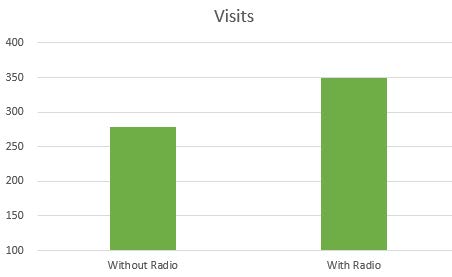
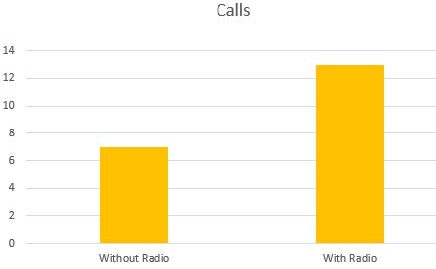
Running traditional media can also help boost your digital marketing efforts. For example, a regional healthcare facility ran a campaign which included paid search and broadcast radio. When the radio commercials were running, the digital campaign saw an increase of 13.38% in visits/clicks, and an 85.71% increase in calls.

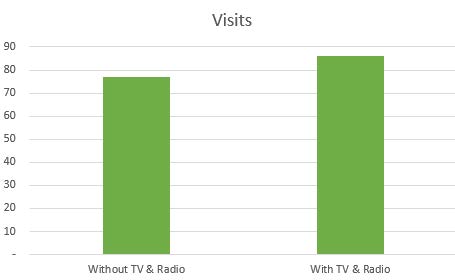
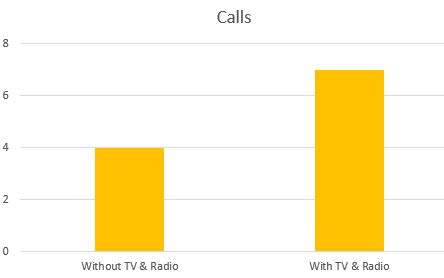
In another example, a local HVAC company ran a digital marketing campaign (paid search, online display and video) in conjunction with a traditional media campaign of broadcast radio and TV. During the time traditional media was running, the paid search campaign had an 11.69% increase in visits/clicks and a 75% increase in calls.